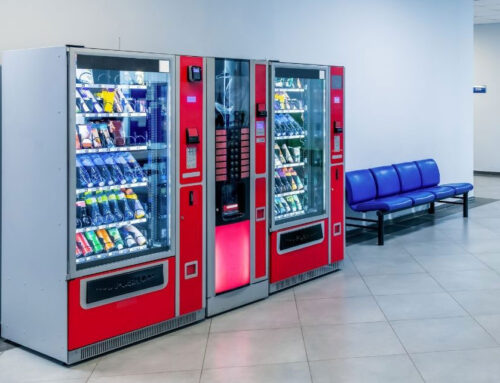

Today’s author with https://tassivending.com/ shall explain the future of workspace snacking and the Micro-Market food vending business.
The vending industry has evolved rapidly in the past decade, but 2026 marks a turning point where micro markets officially outpace traditional vending machines as the preferred breakroom solution for offices, warehouses, campuses, and multi-tenant facilities.
Driven by consumer demand for healthier options, a frictionless shopping experience, and smarter workplace amenities, micro markets have become a staple of modern breakrooms. Here’s what the landscape looks like in 2026 — and why businesses are investing in micro market vending more than ever before.
What Exactly Is a Micro Market?
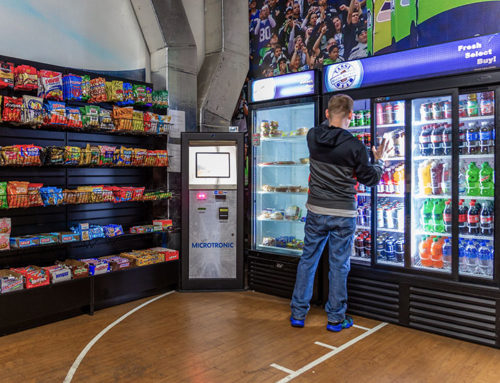
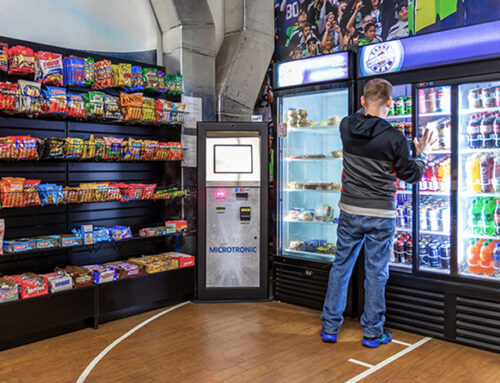
A micro market is an unmanned, self-service retail space offering fresh food, snacks, beverages, and even personal items. Instead of a vending machine’s limited inventory, a micro market provides an open-shelf “grab-and-go” experience paired with a self-checkout kiosk, mobile payment app, or smart cooler technology.
Think of it as a mini convenience store inside the workplace — open 24/7, fully automated, and stocked based on employee preferences.
Why Micro Markets Are Booming in 2026
- Employee Experience Is Now a Priority
Companies are competing for talent with better amenities. A well-designed micro market shows employees they’re valued — offering fresh meals, healthy snacks, and a breakroom space that feels modern.
- Demand for Healthier & Fresh Food Options
Workers want more than chips and sodas. Micro markets support:
- Fresh salads
- Protein boxes
- Wraps and sandwiches
- Cold brew coffee
- Low-sugar beverages
- Plant-based snacks
Traditional vending machines simply can’t provide this range.
- 24/7 Availability for Hybrid and Shift Work
As hybrid schedules and off-hour shifts grow, micro markets ensure employees have access to food at all times — without the need for a staffed café.
- Cashless Convenience Has Become Standard
2026 continues the trend of cashless-first workplaces. Micro markets use:
- Tap-to-pay
- Mobile apps
- Biometric checkout
- QR self-scan
- Smart coolers with auto-sensing technology
Fast, frictionless checkout is now an expectation, not a luxury.
Top Micro Market Trends for 2026
- AI-Driven Inventory & Smart Restocking
AI tools now predict product demand by analyzing purchasing patterns. This results in:
- Fewer stockouts
- Less waste
- More personalized product assortments
- Real-time remote monitoring
Operators can even tailor markets by department or location.
- Smart Refrigeration With Auto-Locking Technology
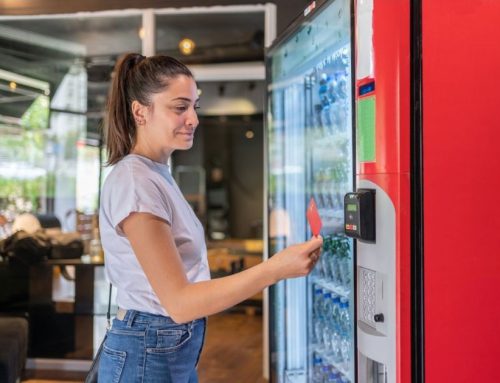
Coolers can detect when items are removed and automatically charge the shopper at checkout. If payment fails, the cooler locks — removing theft concerns while allowing an open shopping experience.
- Expanded Product Categories
Micro markets are now carrying:
- OTC medications
- Office supply essentials
- Energy drinks & functional beverages
- Frozen meals
- Premium coffees
- Personal care items
They’re becoming a one-stop convenience center inside the workplace.
- Integration With Wellness Programs
Businesses are linking micro markets with corporate wellness incentives:
- Discounts on healthy items
- Reward points for nutritious choices
- QR-code tracking for wellness challenges
This alignment increases employee engagement and satisfaction.
- Sustainability & Eco-Friendly Packaging
2026 micro markets prioritize:
- Local food suppliers
- Eco-friendly packaging
- Energy-efficient refrigeration
- Digital receipts
Green initiatives help companies meet sustainability goals.
Benefits for Businesses
✔ Zero Cost to Employers (Most of the Time)
Micro market providers typically install, stock, and service the market at no cost, earning revenue directly from sales.
✔ Increased Employee Productivity
Employees no longer leave the building for snacks or meals, reducing unproductive time and improving morale.
✔ Enhanced Breakroom Culture
A micro market becomes a hub for connection, relaxation, and team building — which helps retention and workplace culture.
✔ Scalable for Any Location Size
Whether you have 40 employees or 2,000, micro markets adapt. Smaller “nano markets” fit compact spaces, while large open-concept markets support big corporate environments.
Challenges & Solutions in 2026
Security & Shrinkage
With open shelving, theft is a concern. But new solutions include:
- AI security cameras
- Smart cooler locks
- User account tracking
- App-based authentication
Shrinkage has dropped significantly thanks to technology.
Freshness Management
Fresh food has a short shelf life. AI-enabled restocking systems and strict vendor partnerships ensure freshness while reducing waste.
Space Requirements
Not every breakroom has extra space, but modular micro market setups make installation easier, even in compact workplaces.
What the Future Holds Beyond 2026
Micro markets will evolve into fully automated smart stores with:
- No-touch biometric checkout
- Personalized product recommendations
- Automated robotic restocking
- Live nutrition scanning
- Integration with workplace management apps
The breakroom is becoming a tech-enabled ecosystem rather than a simple snack area.
Final Thoughts: 2026 Is the Year of the Micro Market Revolution
Micro market vending is transforming workplaces across the U.S., offering employees better choices and giving businesses a modern, cost-effective amenity. As technology continues to advance, micro markets are only becoming smarter, fresher, and more engaging.
For companies looking to upgrade their breakroom, support wellness, and boost employee satisfaction, 2026 is the perfect time to embrace micro market vending.